Canning Zucchini in Pineapple Juice

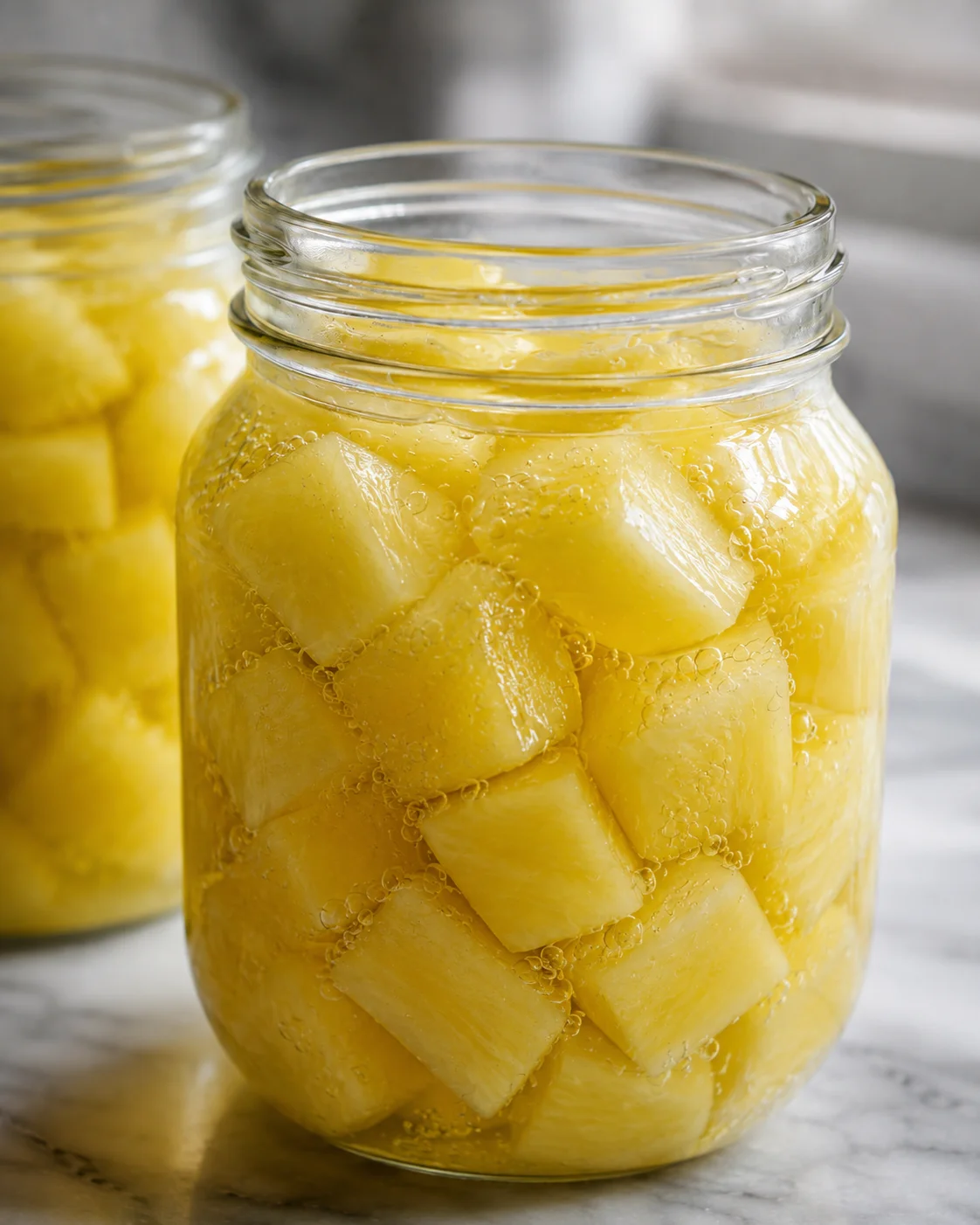
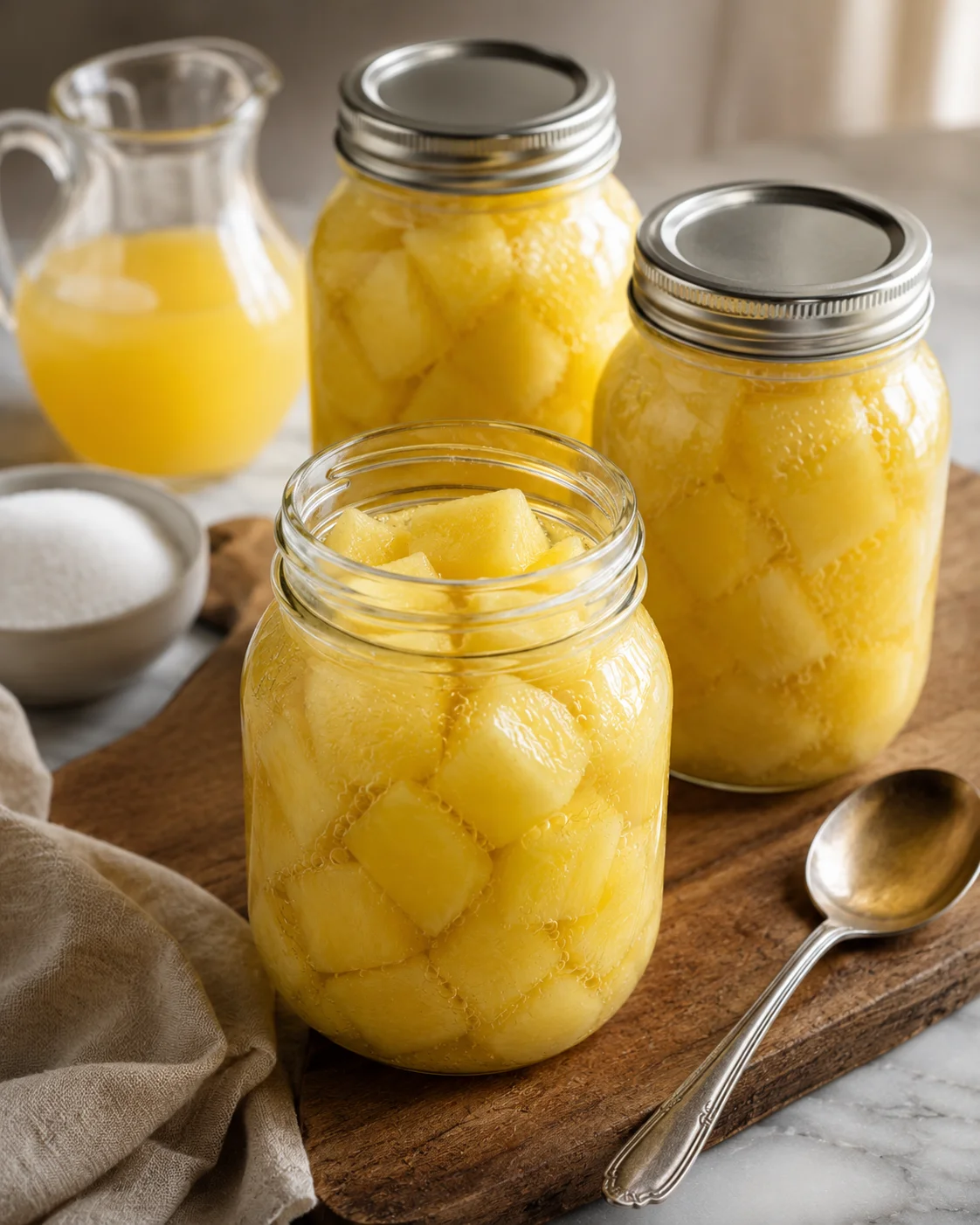
Here’s a wonderful way to preserve your summer zucchini by canning it in a deliciously sweet and tangy pineapple juice syrup. This method lets you create shelf-stable jars that stay fresh in your pantry for months. You’ll mix fresh zucchini with pineapple juice, bottled lemon juice, and sugar, then simmer it briefly before packing into jars and processing in a water bath. The final product is a bright and fruity preserve that makes a fantastic condiment, side dish, or a fresh twist to salads and desserts.
When zucchini floods your garden in the summer, this recipe helps you save that bounty by turning it into cheerful, shelf-stable jars you can enjoy year-round. The zucchini softens in a sweet-tart pineapple and lemon syrup, packed into pint or half-pint jars, then processed in a water bath to ensure safety and shelf life. The result is a crisp, fruity treat perfect for serving as a flavorful side, mix-in for salads, or dolloped on desserts for a touch of bright sweetness.
Keep reading to find a straightforward ingredient list (zucchini, pineapple juice, bottled lemon juice, and sugar), clear step-by-step canning directions (hot packing your jars, simmering for 20 minutes, then a 15-minute water-bath process), and important safety info about acidity and altitude adjustments. Plus, you’ll get handy tips, fun flavor twists, and storage advice so you can make the very best jars. Cooking time is just about 20 minutes for simmering, though you’ll want extra time for prepping, packing jars, processing, and letting everything cool down comfortably.
Why You’ll Love These Jars
- Turns all that fresh, summer zucchini into long-lasting pantry goodness you can enjoy whenever you want.
- The sweet-tart blend of pineapple and lemon juice livens up zucchini’s mild flavor, making it super versatile for lots of dishes.
- This method is quick and easy, requiring just a 20-minute simmer plus standard water-bath canning—no pressure canner needed.
- Pint and half-pint jars look nice, making these preserves perfect for gifting or saving for later snacking.
What You’ll Need
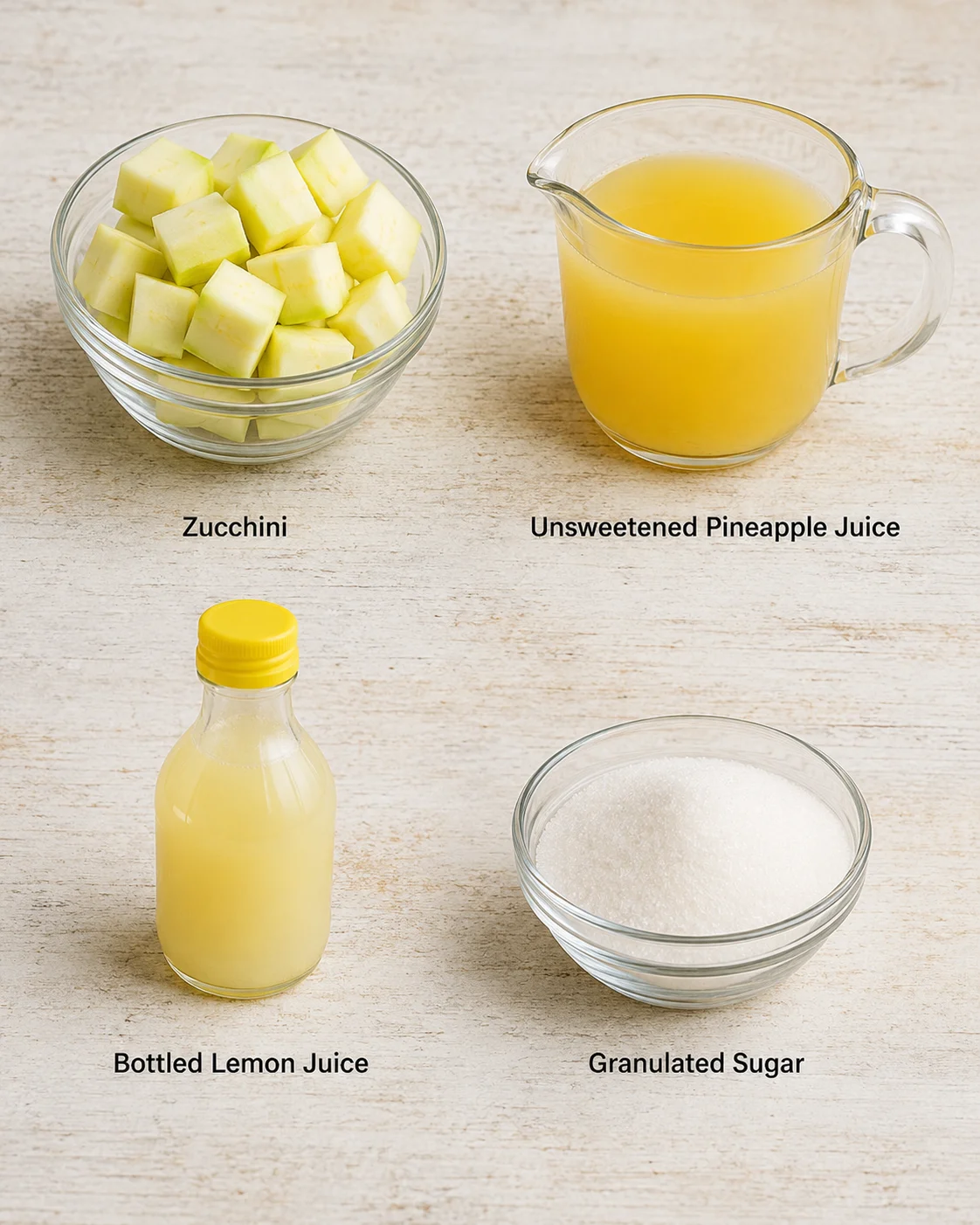
- 16 cups zucchini, peeled and either cubed or shredded (roughly 4 quarts)
- 5 3/4 cups unsweetened pineapple juice (about 46 oz canned)
- 1 1/2 cups bottled lemon juice
- 3 cups granulated sugar
How to Can Zucchini
- Fill a water bath canner with water and heat it to about 180°F to warm jars.
- Wash zucchini, peel, remove any large seedy centers, and cut uniformly into shredded or 1/2″ cubes.
- Stir zucchini, pineapple juice, bottled lemon juice, and granulated sugar in a large pot.
- Bring the mixture to a gentle simmer and cook for 20 minutes.
- Keep jars hot and fill them with the hot zucchini and syrup, leaving 1/2 inch headspace.
-
Remove air bubbles with a bubble remover or knife, wipe jar rims clean, and place two-part lids on, tightening bands finger-tight.
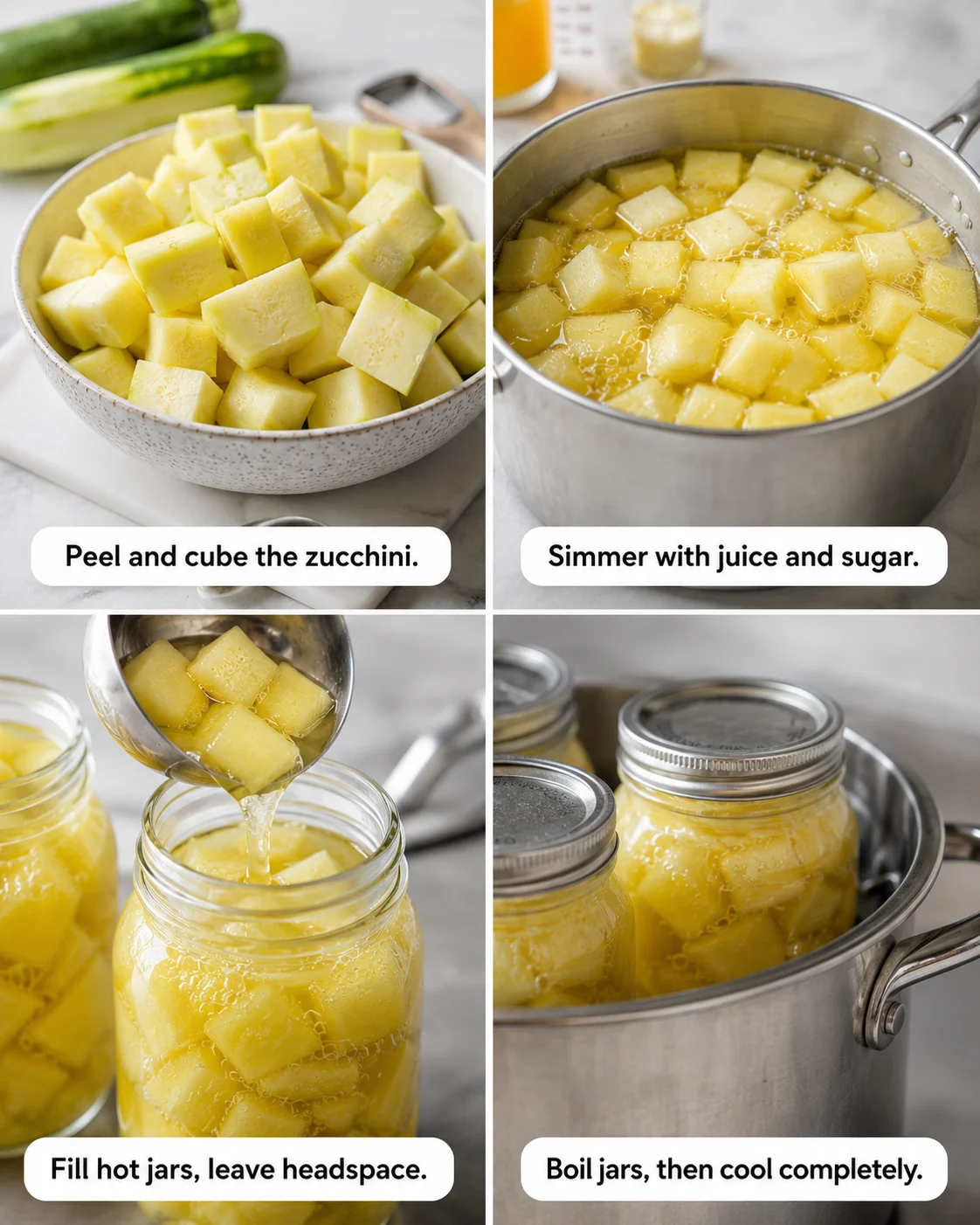
- Lower filled jars into the hot water bath canner, bring to a full rolling boil, and process for 15 minutes (adjust processing time for altitude as needed).
- When the timer ends, turn off heat and let the canner sit undisturbed for 5 minutes, then lift jars out and place them on a towel-covered counter to cool completely for 12–24 hours.
- After cooling, press the center of each lid to check the seal; refrigerate any jars that did not seal and use them soon.
Pro Tips for Best Results
- Choose zucchini that are fresh and firm for the best texture; cut out any large seedy centers if needed.
- Measure juices and sugar carefully—bottled lemon juice ensures consistent acidity, which is key for safe water bath canning.
- Leave the proper 1/2 inch headspace and run a bubble remover tool or knife around the jar to get rid of trapped air before sealing.
- Keep your jars hot before filling by warming them to about 180°F; this helps prevent jars cracking and keeps headspace steady during processing.
- Always adjust the processing time if you’re canning at higher elevations. Consult a trusted canning guide for accurate altitude-based timing.
- Label your jars with the date and contents to keep track and use the oldest jars first.
Flavor and Texture Options
- For a bright and spicy kick, toss in 1–2 teaspoons of freshly grated ginger during the simmer—this adds zest without risking safety.
- Add a little warmth by stirring in 1/2 teaspoon ground cinnamon or a small cinnamon stick during cooking; just remember to remove the stick before jar packing.
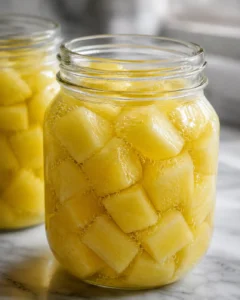
- Choose shredded zucchini if you want a relish-like, softer texture, or go with 1/2″ cubes for chunkier jar contents—both work beautifully with this recipe.
- If sweeter isn’t your thing, feel free to dial back the sugar slightly. Just don’t touch the bottled lemon or pineapple juice amounts since they’re crucial for safe acidity.
Storing and Shelf Life
- Keep unopened, properly canned and sealed jars in a cool, dark spot for up to 12–18 months for best flavor and quality.
- Once open, refrigerate and enjoy within two weeks for the freshest taste and appearance.
- If any jars didn’t seal, pop them into the fridge right away and use within a few days to stay safe and tasty.
- To serve warm, gently heat contents in a saucepan on the stove. Never microwave jars or heat them while sealed to avoid breakage and safety hazards.
Common Canning Questions
Q: Is bottled lemon juice necessary? A: Yes! Bottled lemon juice has a consistent acidity level needed for safe water bath canning. Fresh lemon juice varies and isn’t recommended for tested recipes like this one.
Q: Can I use frozen zucchini? A: You can use frozen zucchini, but be sure to thaw and drain it well first. Keep in mind frozen zucchini is softer and may change the texture of your final jars.
Q: How will I know if a jar didn’t seal? A: When sealed properly, lids should curve downward slightly and won’t pop when pressed. If a lid flexes or makes clicking noises, refrigerate that jar and use it soon.
Q: Can I use larger jars? A: This recipe is tailored for pint or half-pint jars. If you want to use bigger jars, please check a reputable canning guide to adjust processing times and ensure safety.
Q: Do I need to adjust processing time for higher altitudes? A: Yes, at higher elevations cooking times or boiling intensity might need changes. Always consult an altitude-specific canning resource to get the correct times for your location.