Easy Garlic Butter Cabbage Noodles: Keto-Friendly Real Food

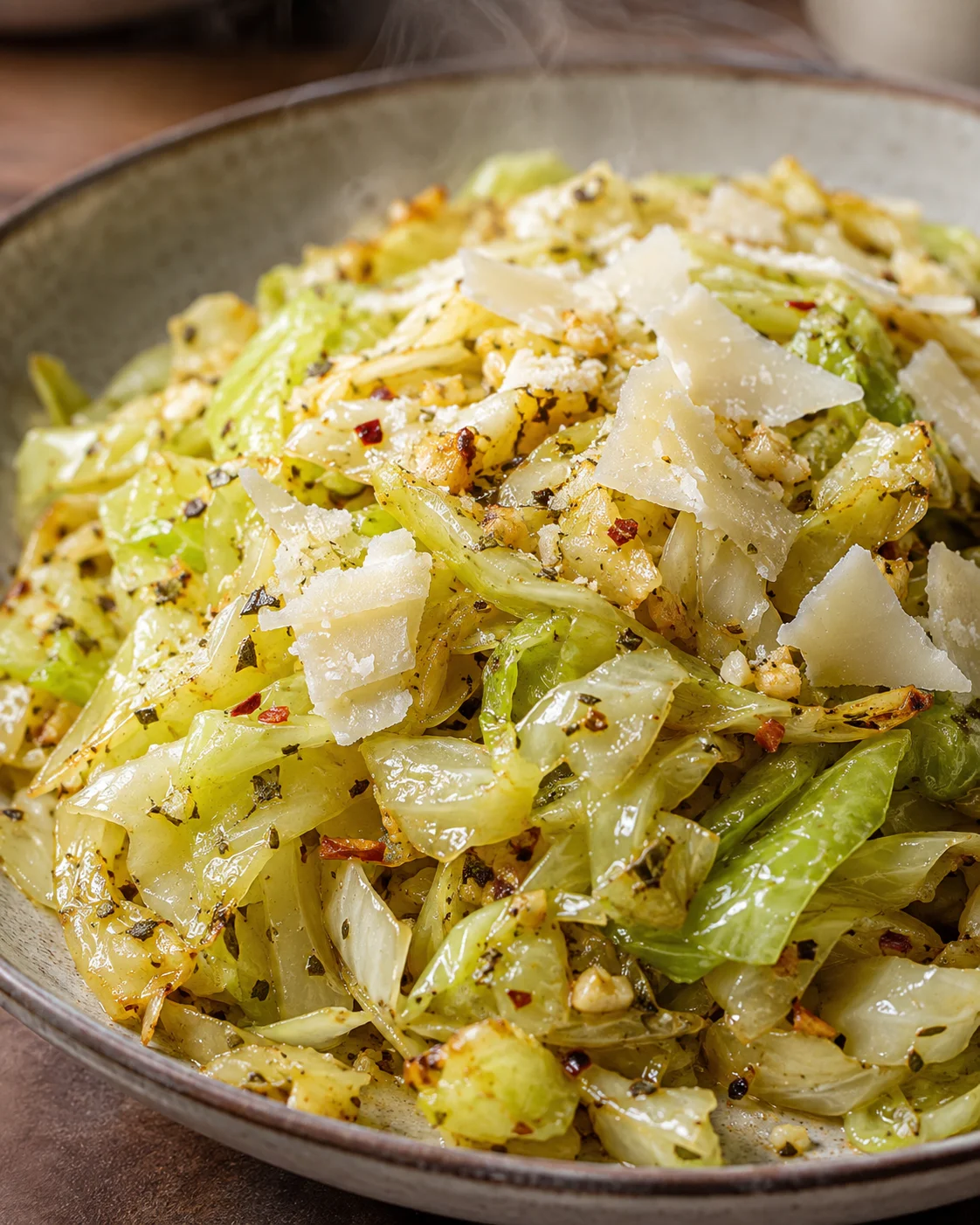
Pasta is one of those carbs that really likes to hang out on my hips. Even when I make my Sprouted Sourdough Pasta just right, eating it day after day still slows me down.
That’s why I created this super easy garlic butter cabbage noodles recipe for those days when I want fewer carbs but still crave that comfort-food vibe. Bursting with garlicky butter goodness, it tricks your taste buds into thinking you don’t need heavy pasta to feel totally satisfied.
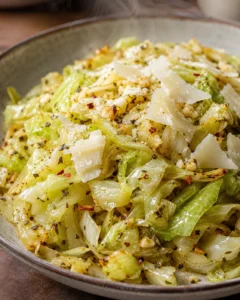
If you adore pasta but want to lighten things up, these garlic butter cabbage noodles are just what you need—rich, garlicky, and completely satisfying without the heavy starch. This recipe uses just eight honest ingredients (butter, garlic, Parmesan, and a few herbs do most of the work), and it relies on a quick sear to keep the cabbage bright and noodle-like in texture.
Stick with me, and you’ll get everything for making this dish right at home:
- Step-by-step photos showing how to cut a cabbage into long, noodle-like strips.
- A straightforward ingredient list with one-pan cooking instructions that help prevent soggy noodles.
- Handy tips for perfect texture and flavor, plus ideas to jazz things up with bacon, sausage, or a touch of marinara sauce.
- Storage and reheating advice, plus a quick FAQ section to troubleshoot any bumps along the way.
Keep reading for those slicing photos, cooking tips, and easy variations. This recipe is all about proving you don’t need traditional starchy pasta to enjoy a comforting and filling meal.
Satisfying Low-Carb Comfort
If pasta is your jam but you want to cut back on carbs, this recipe gives you all the best parts of a noodle dish—garlicky, buttery comfort—without the heavy starch. When sliced right, the cabbage forms long strands that feel just like noodles on your fork, making it familiar but lighter and surprisingly filling.
- Low-carb and satisfying: The butter and optional protein add-ins keep you full, so you’re less likely to snack later—ideal if you’re watching your carbs.
- Big flavor, minimal ingredients: Only eight real-food ingredients plus some dried herbs create a rich, garlicky butter flavor that feels indulgent but simple.
- Quick and easy: Little prep needed (you can even slice the cabbage and mince the garlic a day ahead), plus it all cooks in one skillet for a fuss-free weeknight dinner with easy cleanup.
- Versatile: Enjoy as a buttery side dish, a light main with added protein like bacon or sausage, or topped with marinara for a low-carb twist on red sauce pasta.
- Budget-friendly pantry staples: Green cabbage, butter, garlic, and dried herbs are affordable and probably already hanging out in your kitchen.
- Perfect texture when it’s done right: Sear instead of steam, stop cooking as soon as the cabbage wilts, and finish with fresh shaved Parmesan for a silky but slightly crisp bite.
Bottom line: this simple, flexible swap for pasta hits all your comfort-food cravings without weighing you down. It’s easy to tweak, fast to throw together, and honestly satisfying every single time.
Butter and garlic truly steal the show in this carb-free noodle dish. Butter brings in those good-for-you fat-soluble vitamins and keeps me feeling full and content. Don’t skimp on plenty of fresh shaved Parmesan on top—it’s the final touch that turns these garlic butter cabbage noodles into something special!
Simple Real-Food Ingredients
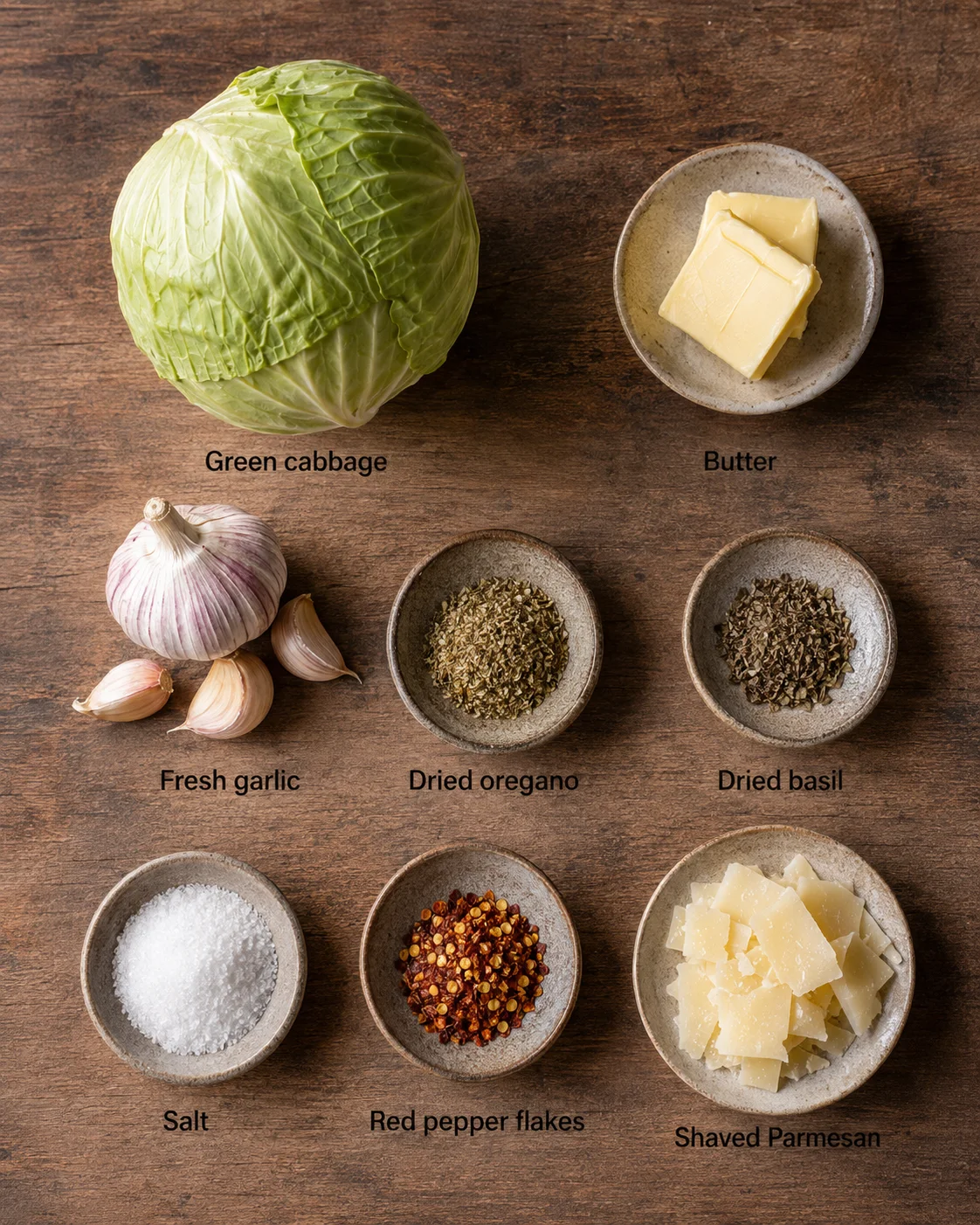
- 1 head green cabbage
- 1/4 cup butter
- 1 bulb fresh garlic
- 1 teaspoon dried oregano
- 1 teaspoon dried basil
- 1 teaspoon salt
- 1/4 teaspoon red pepper flakes
- 1/2 cup Parmesan, shaved
Cutting and Cooking the Cabbage
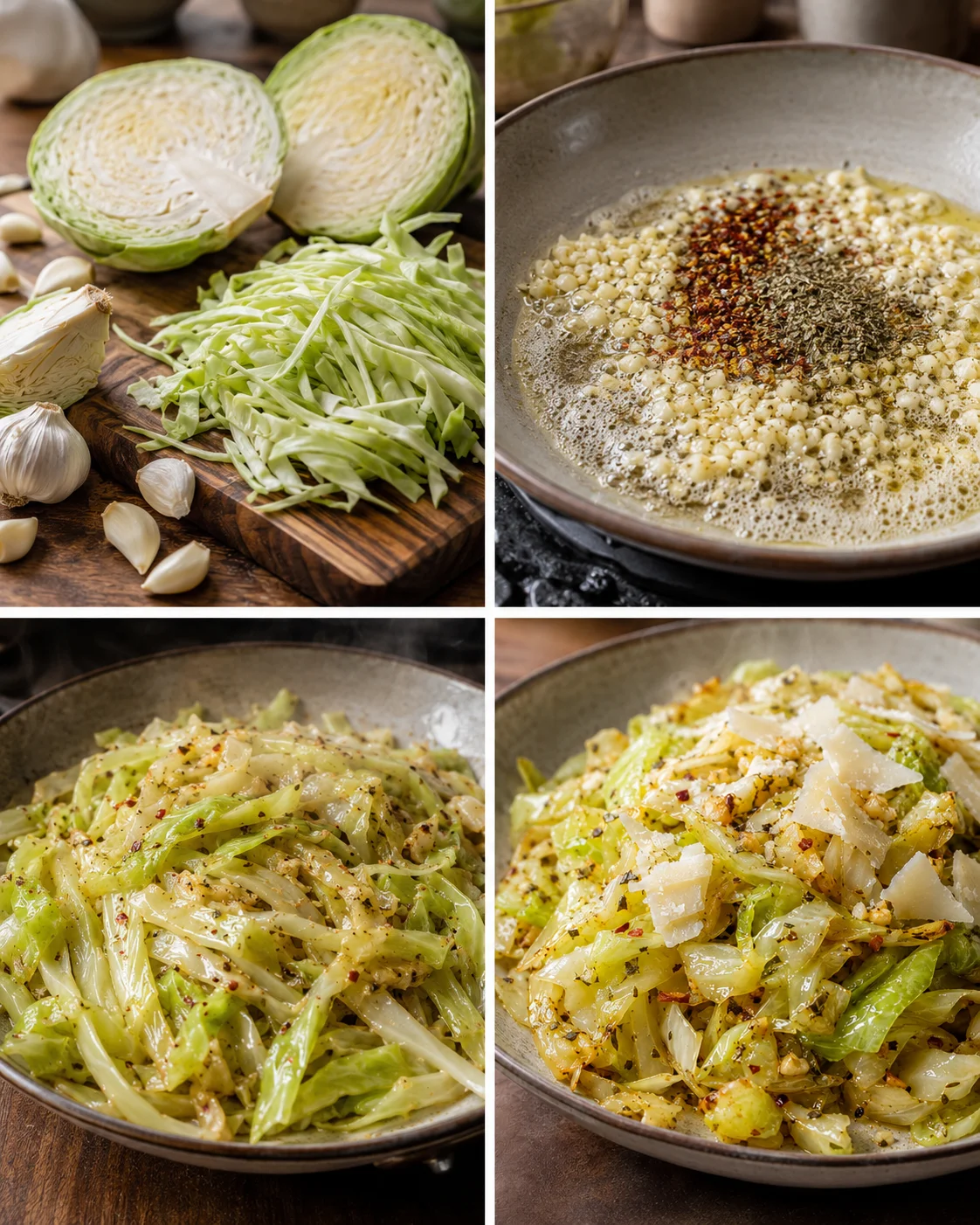
- Cut the cabbage in half.
- Remove the core by slicing out a pyramid-shaped wedge.
- Cut straight down through each half to make four equal-sized chunks.
- Flip each chunk and slice vertically following the leaf’s spine into strips about 1/2 inch thick.
- Break apart the strips into long, noodle-like strands.
- Peel and finely mince the garlic.
- Melt the butter in a large skillet over medium-high heat.
- When the butter is melted and bubbly, add the garlic and sauté just until fragrant and beginning to turn golden; reduce heat if it browns too quickly.
- Stir in dried oregano, dried basil, salt, and red pepper flakes.
- Add the cabbage strips to the skillet and toss gently to coat in the garlic butter.
-
Cook the cabbage over medium-high heat, searing (not steaming) and stirring occasionally, until it just starts to wilt and release a little juice (about 5–8 minutes); cook in batches if the pan is crowded.
- Off the heat, toss the noodles with a little extra butter to coat.
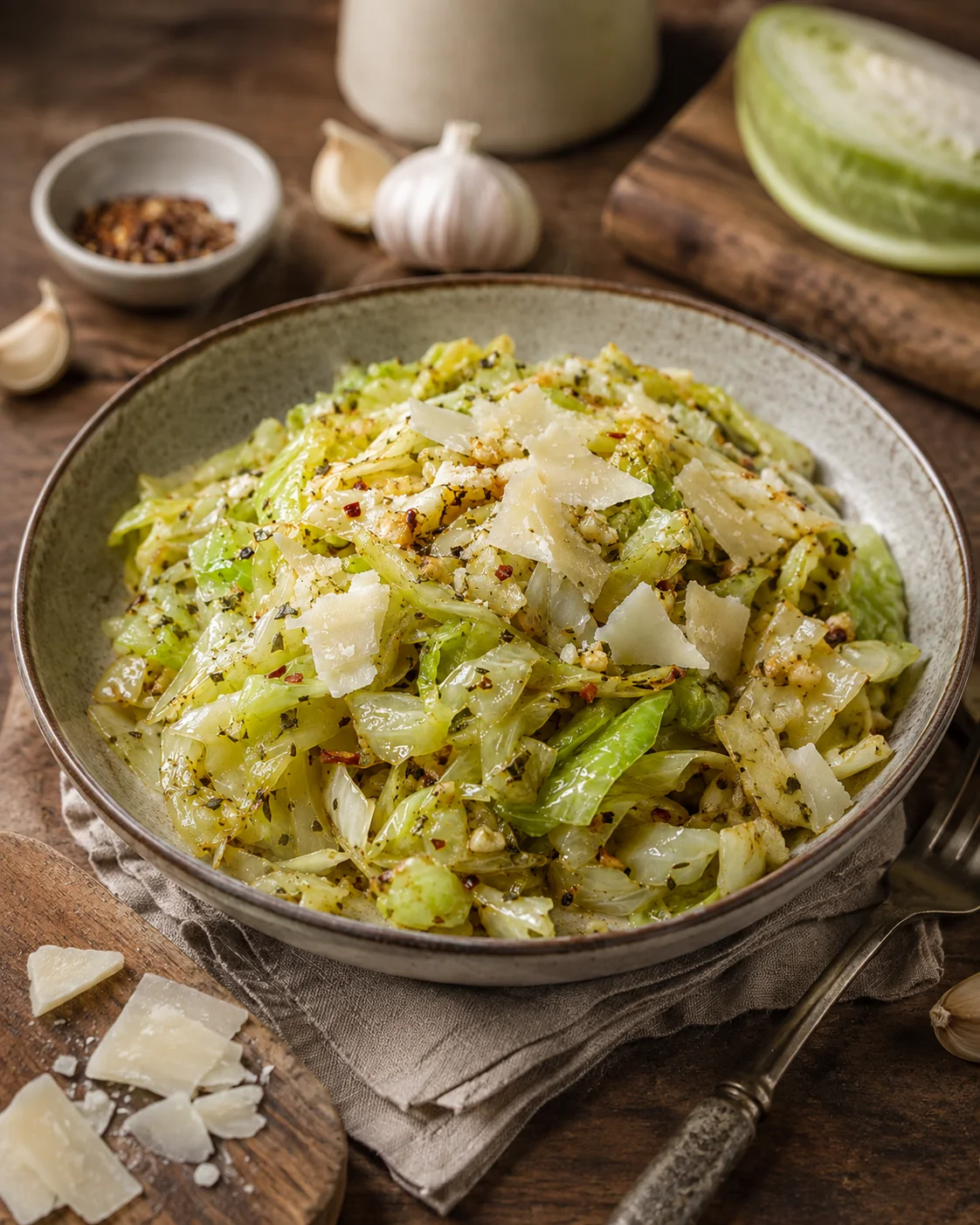
- Transfer the cabbage noodles to bowls or plates and top with fresh shaved Parmesan.
Tips for Tender, Not Soggy Noodles
Cabbage noodles can be a little tricky, but a few simple tweaks make all the difference. Follow these tips for noodles that are tender but not soggy, and full of garlicky buttery flavor:
- Cook until the cabbage just starts to wilt and release a bit of juice—overcooked cabbage turns soggy and watery.
- Use medium-high heat and a roomy skillet so the cabbage sears lightly instead of steaming. If your pan feels crowded, cook in batches to keep the texture spot on.
- Brown the garlic just until it’s fragrant and starting to color a little. Burned garlic tastes bitter, so turn down the heat if it’s browning too fast.
- For extra richness, toss the noodles with a little extra butter off the heat right before serving to coat everything in a silky glaze.
- Always shave or grate your Parmesan fresh and add it just before serving. Keeping it separate prevents the cheese from melting into a thick sauce and weighing down your noodles.
- Season with salt after adding the Parmesan, since the cheese adds saltiness on its own. If you’re using salted butter, cut back on the added salt.
- If you want a touch of brightness, a squeeze of lemon juice or a splash of red wine vinegar right at the end brings a lovely pop without adding carbs.
How to Store and Reheat
Keeping your garlic butter cabbage noodles fresh and tasty is easier than you think. Here’s how to store and reheat them without losing texture or flavor:
- Refrigerate: Put leftovers in an airtight container and store in the fridge for 3 to 4 days. If you can, keep the shaved Parmesan separate to avoid sogginess.
- Freeze: I don’t recommend freezing cabbage noodles. Thawing makes the cabbage watery and mushy, ruining the texture.
- Reheat: Warm leftovers gently in a skillet over medium-low heat with a little butter or oil to refresh fats and stop sticking. Stir often until heated through.
- Microwave: You can microwave leftovers covered for short bursts (30–60 seconds), stirring in between. It’s faster but expect softer, wetter noodles.
- Make-ahead: You can prep by slicing cabbage and mincing garlic up to 24 hours ahead—just keep them refrigerated separately. Or cook the cabbage slightly less if you plan to reheat later to avoid over-softening.
Quick Answers to Common Questions
Here are some quick answers to questions I get a lot about garlic butter cabbage noodles:
- Can I use other types of cabbage? Definitely! Green, red, savoy, or Napa all work. Just know cooking times and textures vary — for example, Napa softens faster and looks a bit different.
- Can I swap butter for oil? Yes, olive oil or neutral oils work fine, and vegan butter is a good dairy-free option.
- Can I make this vegan? Sure thing! Use vegan butter or oil, and swap Parmesan for a plant-based cheese or nutritional yeast.
- How long should the cabbage cook? Usually about 5 to 8 minutes on medium-high heat, just until it wilts and starts to release a little juice. Times vary a bit depending on your pan and stove.
- Why did my cabbage turn watery? That usually happens from overcooking or covering the pan. Use higher heat, avoid overcrowding, and stop cooking when it just becomes tender.
- Can I add proteins or extras? Absolutely! Bacon, sausage, chicken, meatballs, or marinara are all great. Cook any proteins first, then toss them with the cabbage.
- Is pre-shredded coleslaw mix okay? Yes, but since it has thinner shreds and sometimes carrots, reduce cooking time to keep it from getting mushy.