Garlic Herb French Bread

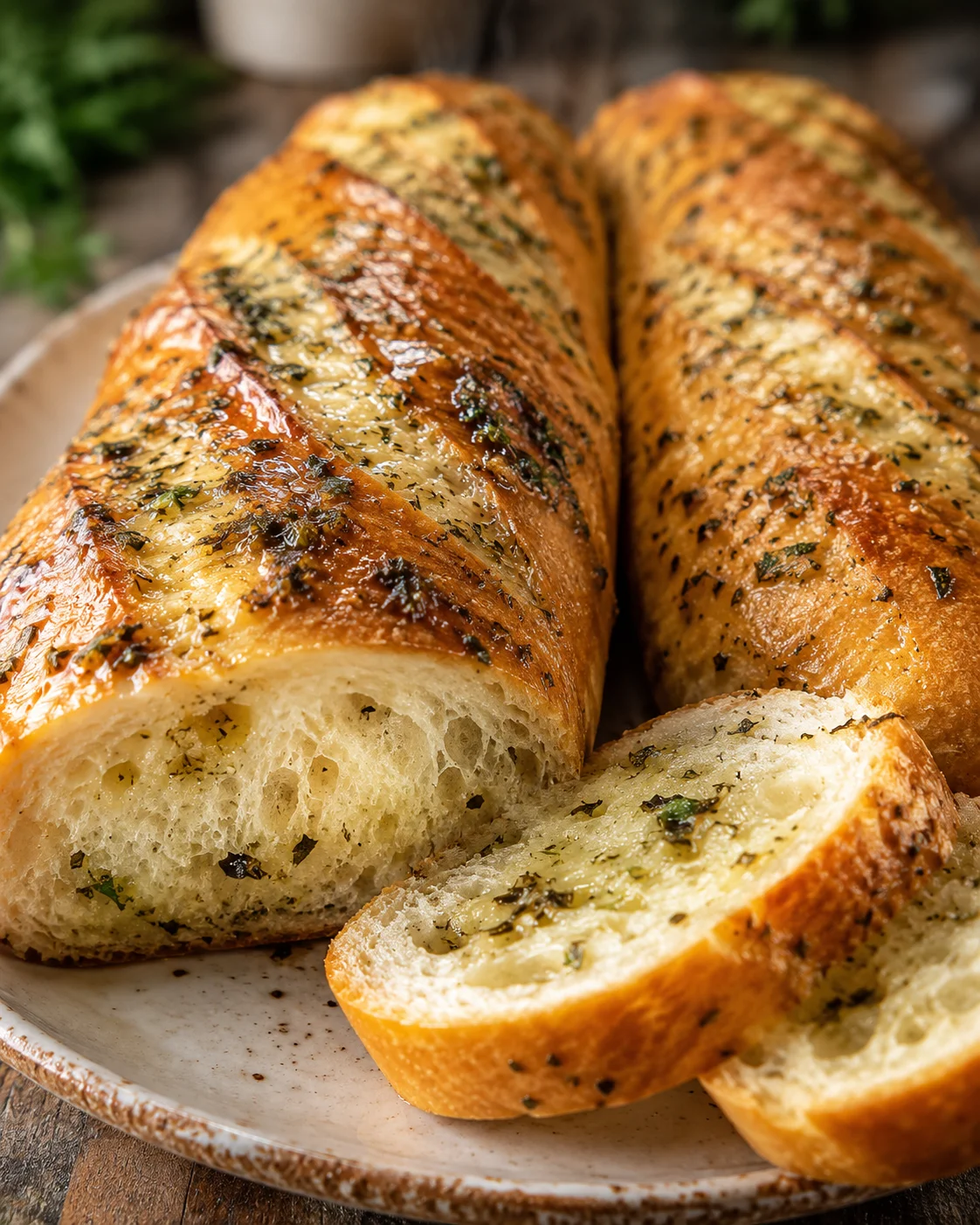
This recipe offers everything you need to bake this bread yourself: a short and straightforward ingredient list with common dried herbs, step-by-step instructions that walk you through mixing, shaping, and baking, plus handy timing tips. It yields about 24 servings (each around 82 calories), with about 20 minutes of active preparation and 20 minutes of baking. Remember, dough rises twice, so set aside about 1¾ to 2 hours from start to finish.
- What you’ll get: a simple mixing and kneading method, different shaping choices (loaves, braids, or rolls), and a tasty garlic-herb butter to brush on fresh from the oven.
- What’s included: all the right equipment details, clever tips like how to speed up rising with your oven, recommended yeast brand advice, plus variations, storage, reheating tips, and answers to common questions.
- Who it’s for: home bakers craving a dependable, flavorful homemade garlic bread that works for busy weeknights or casual entertaining.
Stick with the instructions and tips below, and you’ll enjoy golden, aromatic bread loaves that everyone will love fresh from your oven.
Why You’ll Love It
This garlic herb french bread takes ordinary homemade bread to a new level by blending herbs and garlic right into the dough and finishing the loaves with a buttery, garlicky herb spread. It stands out because it’s:
- Infused with bright, fresh herb and garlic flavors that go perfectly with soups, pasta dishes, or big salads—try it with this Lemon-Dijon Asparagus and Pea Macaroni Salad.
- Easy to make using dried herbs from your pantry and simple baking ingredients.
- Flexible in shape — whether you want loaves, elegant braids, or dinner rolls.
- Delicious when fresh, perfect for dipping in marinara sauce, olive oil, or alongside warm soups.
What You’ll Need
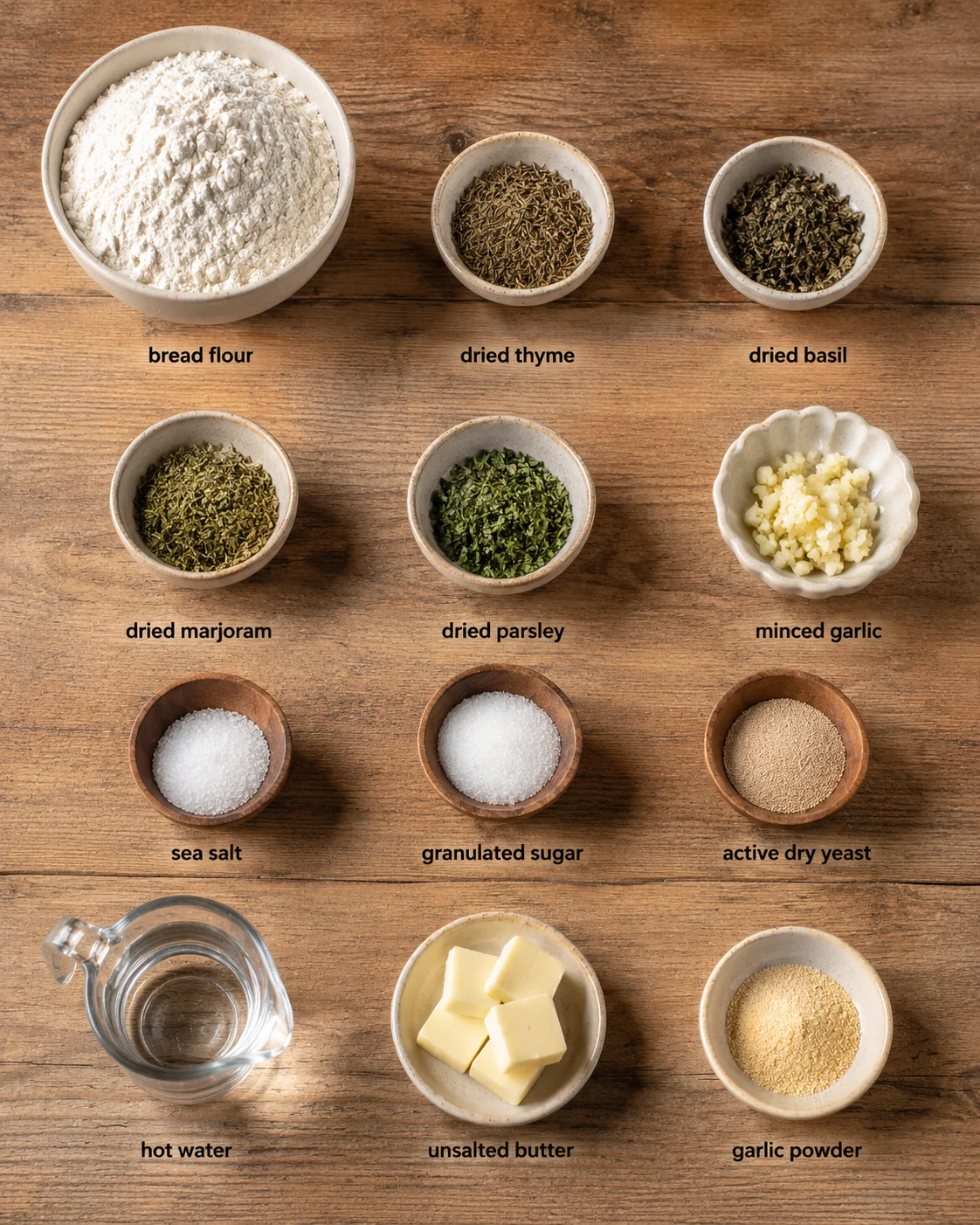
- 2 1/2-2 3/4 cups bread flour
- 1 tsp. dried thyme
- 1 tsp. dried basil
- 1 tsp. dried marjoram
- 1 tbsp. dried parsley
- 1 tbsp. minced garlic from a jar (or about 4 cloves fresh garlic, minced)
- 1 tsp. sea salt
- 1 tbsp. granulated sugar
- 1 pkg. Fleishmann’s active dry yeast (or 2 ¼ tsp.)
- 1 cup hot water (around 120°F)
- 3 tbsp. unsalted butter (melted, or olive oil)
- 1/8 tsp. dried marjoram
- 1/8 tsp. garlic powder
- 1 tsp. dried parsley
- 1/8 tsp. dried basil
- 1/8 tsp. dried thyme
How to Make It
- In a large bowl, mix 2 cups bread flour with sea salt, granulated sugar, dried thyme, dried basil, dried marjoram, dried parsley, minced garlic, and active dry yeast.
- Pour in hot water (about 120°F) and stir or beat until fully combined and smooth.
- Gradually add remaining bread flour (about 1/2 to 3/4 cup), a little at a time, until the dough is soft but still kneadable.
-
Turn dough onto a lightly floured surface and knead 3 to 7 minutes until smooth and elastic.
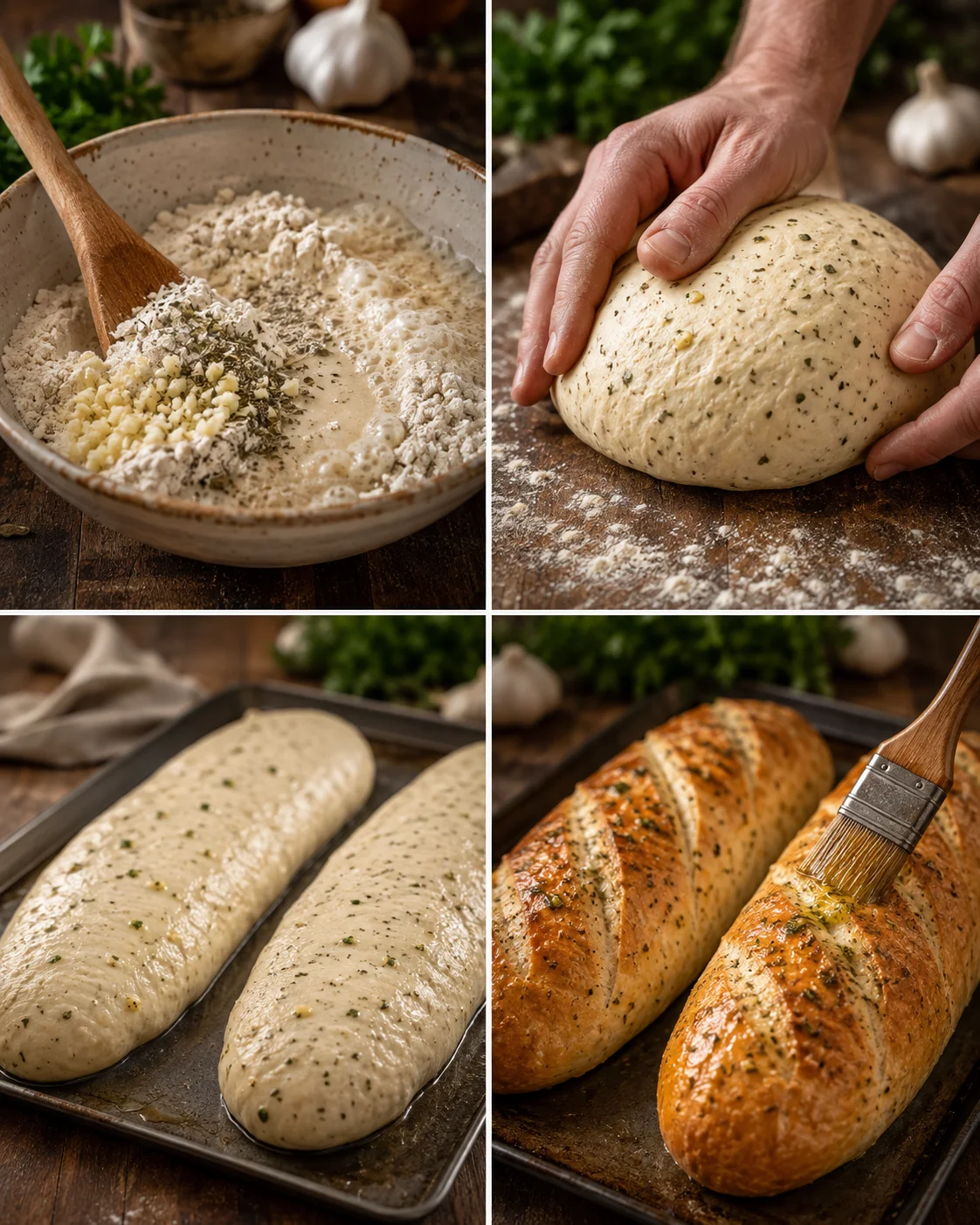
- Place the dough in a greased bowl and lightly grease the top of the dough.
- Cover the bowl with a clean, non-terry tea towel.
- Preheat the oven for 1 minute, turn it off, and place the covered bowl inside (or set the bowl in a warm, draft-free spot) to speed rising.
- Let the dough rise about 45 minutes until roughly doubled in size.
- Punch down the dough and divide and shape as desired (two long loaves, three logs for a braid, or smaller loaves/rolls).
- Roll or braid the dough starting from the long side to form loaves.
- Place shaped dough pieces on a well-greased cookie sheet.
- Cover the shaped dough and repeat the warm-oven trick (heat oven 1 minute, turn off, place dough inside).
- Let the dough rise a second time 30 to 45 minutes until nearly doubled.
- About 5 minutes before the second rise finishes, preheat the oven to 400°F, leaving the dough inside while it heats.
- Bake the loaves at 400°F for 15 to 20 minutes, until golden brown and cooked through.
- While the bread bakes, whisk together 3 tablespoons melted butter with 1/8 teaspoon each dried marjoram, dried basil, and dried thyme, plus 1/8 teaspoon garlic powder and 1 teaspoon dried parsley.
- Immediately after baking, brush the hot loaves generously with the garlic herb butter.
- Let the bread cool a few minutes before slicing.
Expert Baking Tips
- Try to use Fleischmann’s active dry yeast if you can — it really helps keep the second rise from collapsing and makes the bread lighter.
- Make sure your water isn’t too hot — around 110–120°F is just right. Hotter water can kill the yeast and stop the rise. If you’re new to working with yeast, our Cinnamon Swirl Bread walkthrough shows what properly bloomed yeast looks like so you can confirm you’re on track.
- Knead the dough just enough—about 3 to 7 minutes—until it feels smooth and elastic. Don’t overdo it or the bread might get tough.
- Cover the dough with a slightly damp tea towel to prevent drying and sticking; avoid terrycloth which clings too much.
- The “heat for 1 minute, turn off” oven trick creates a warm, steamy rising chamber that speeds things up without overheating the dough. You can see this warm-proof approach in action in our pizza rolls dough. Keep an eye so your oven doesn’t get too toasty.
- Brush the butter-herb topping immediately after baking to soak right into the crust, giving you a rich, flavorful finish.
- Allow your bread to rest for about 10–15 minutes after baking before cutting to avoid a gummy texture inside.
Variations and Add-Ins
- For a cheesy boost, stir shredded Parmesan or mozzarella into the dough or sprinkle it on top before baking—or take flavor cues from our Green Onion Zucchini Cheddar Quick Bread for a bolder, veggie-studded twist.
- Fresh herbs make a bright, lively flavor. Use about three times the amount of fresh herbs compared to dried (for example, 1 tsp dried = 1 tbsp fresh).
- Use olive oil instead of butter in the dough and on top to make this bread dairy-free.
- Try adding roasted garlic instead of raw minced garlic for a sweeter, mellow garlic taste.
- Swap up to half your bread flour with whole wheat flour if you want a heartier loaf, but expect a denser texture.
- Shape dough into smaller rolls, knots, or a braid for different looks and baking times.
Storing and Reheating Tips
- At room temperature, keep your garlic herb french bread wrapped tightly in plastic wrap or stored in an airtight bag for up to 2 days.
- To freeze, cool the bread completely first. Then slice it or wrap the whole loaf tightly in plastic wrap and foil, or pop it in freezer bags. Freeze for up to 2–3 months. Reheat slices frozen in a 350°F oven for 8–12 minutes, or reheat a whole loaf wrapped in foil for 15–20 minutes.
- When reheating, the oven is your best friend — warm slices at 350°F for 5–10 minutes or give them a quick toast. Avoid microwaving, as it softens the crust and can make the bread chewy if overdone.
- Don’t refrigerate your bread — it dries out faster in the fridge, and nobody wants that!
Frequently Asked Questions
-
Q: Can I use all-purpose flour instead of bread flour?
A: Absolutely! But keep in mind, bread flour has more protein that helps create a chewier, airier bread. Using all-purpose flour will make a softer loaf with a tighter crumb.
-
Q: What about instant or rapid-rise yeast instead of active dry?
A: You can use instant yeast, but adjust or omit the warm rising steps and follow your yeast packet instructions. I stick with active dry (like Fleischmann’s) because it gives steady, reliable results with this recipe.
-
Q: How do I tell if the dough has risen enough?
A: The dough should roughly double in size. A gentle poke should leave a small indentation that bounces back slowly.
-
Q: My loaves collapse during the second rise — what could cause this?
A: That usually means overproofing, too much yeast, or the dough didn’t develop enough gluten. Make sure you don’t let the dough rise past doubled and knead enough for good structure.
-
Q: Can I use fresh herbs instead of dried?
A: Yes! Fresh herbs bring a lovely flavor. Use about three times as much fresh as dried, and adjust to your taste preferences.
-
Q: Can I prepare this bread ahead of time?
A: Definitely. You can shape the loaves, cover them tightly, and refrigerate overnight. When ready to bake, let them come to room temperature and give them a short rise before baking. Or bake straight from chilled — just add a few extra minutes to the baking time. It also holds up beautifully if you’d like to use it in a pressed Italian picnic sandwich loaf.
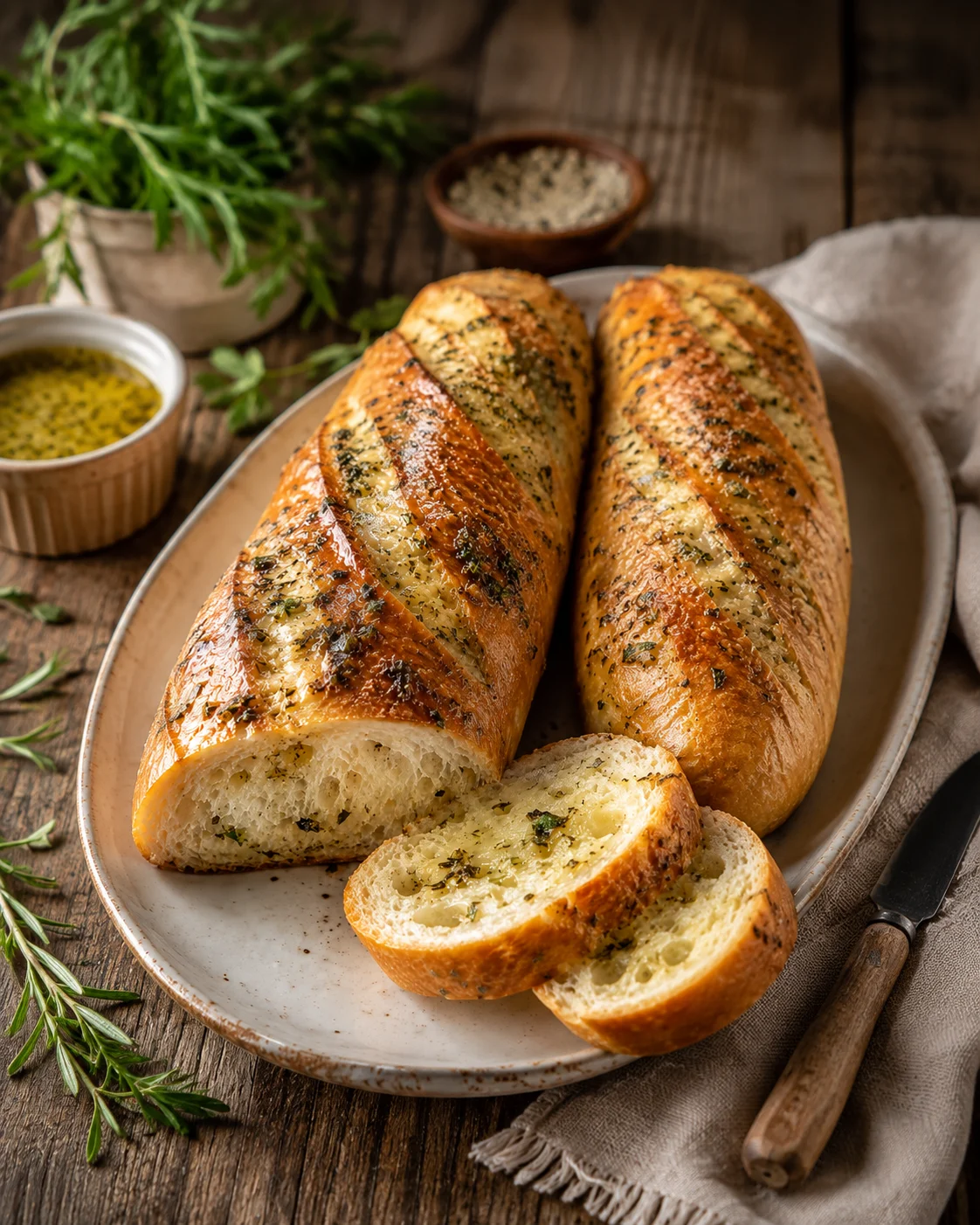
Homemade French bread infused with garlic and a mix of herbs, topped with a flavorful garlic herb butter. Perfect for serving alongside soups, Italian dishes, or pasta.
- Prep Time: 20 minutes
- Cook Time: 20 minutes
- Total Time: 40 minutes plus 1.75 to 2 hours rising time
- Yield: 24 servings 1x
- Category: Breads, Rolls and Muffins
- Cuisine: Italian
Ingredients
- 2 1/2 to 2 3/4 cups bread flour
- 1 tsp. dried thyme
- 1 tsp. dried basil
- 1 tsp. dried marjoram
- 1 tbsp. dried parsley
- 1 tbsp. minced garlic (from a jar or about 4 cloves fresh, minced)
- 1 tsp. sea salt
- 1 tbsp. granulated sugar
- 1 package Fleishmann’s active dry yeast (or 2 1/4 tsp.)
- 1 cup hot water (about 120°F)
- 3 tbsp. unsalted butter (melted, or olive oil)
- 1/8 tsp. dried marjoram (for butter topping)
- 1/8 tsp. garlic powder (for butter topping)
- 1 tsp. dried parsley (for butter topping)
- 1/8 tsp. dried basil (for butter topping)
- 1/8 tsp. dried thyme (for butter topping)
Instructions
- Mix 2 cups of bread flour with sea salt, granulated sugar, dried thyme, dried basil, dried marjoram, dried parsley, minced garlic, and active dry yeast in a large bowl.
- Pour in hot water (around 120°F) and stir or beat well until fully combined and smooth.
- Gradually add the remaining bread flour (about 1/2 to 3/4 cup) a little at a time until the dough feels soft but is still firm enough to knead.
- Turn dough out onto a lightly floured surface and knead for 3 to 7 minutes until smooth and elastic.
- Place the dough in a greased bowl and lightly grease the top of the dough.
- Cover the bowl with a clean, non-terry tea towel.
- Preheat oven for 1 minute, turn it off, then place the covered bowl inside or set the bowl in a warm, draft-free spot to speed the rise.
- Let dough rise for about 45 minutes until roughly doubled in size.
- Punch down dough gently and divide into preferred shapes: two long loaves, three logs for a braid, or smaller loaves/rolls.
- Roll or braid the dough starting from the long side to form loaves.
- Place shaped dough pieces on a well-greased cookie sheet.
- Cover dough and repeat the warm oven trick: heat oven for 1 minute, turn off, and place dough inside.
- Let dough rise a second time for 30 to 45 minutes until nearly doubled.
- About 5 minutes before the second rise ends, preheat oven to 400°F, leaving dough inside as it heats.
- Bake loaves at 400°F for 15 to 20 minutes until golden brown and cooked through.
- While bread bakes, whisk together melted butter with dried marjoram, garlic powder, dried basil, dried thyme, and dried parsley to make garlic herb butter.
- Brush warm loaves generously with garlic herb butter immediately after baking.
- Let bread cool a few minutes before slicing to maintain soft interior.
Notes
Preheating the oven to 350°F for 1 minute and then turning it off creates a warm, steamy environment for faster dough rising. Placing the bowl on a damp tea towel and leaving the oven light on adds humidity and heat., Fleischmann’s active dry yeast is recommended for consistent, reliable rises and to prevent collapsing during the second rise., Oven bake time may vary; bread usually bakes around 15 minutes at 400°F. Watch for a golden crust for perfect baking., Prep time of about 20 minutes does not include the rising phases, which total about 1¾ to 2 hours., Allow bread to rest about 10–15 minutes after baking for best texture before slicing.
Nutrition
- Serving Size: 1 serving
- Calories: 82 kcal
- Fat: 2 g
- Carbohydrates: 14 g
- Protein: 2 g