Garlic Herb French Bread

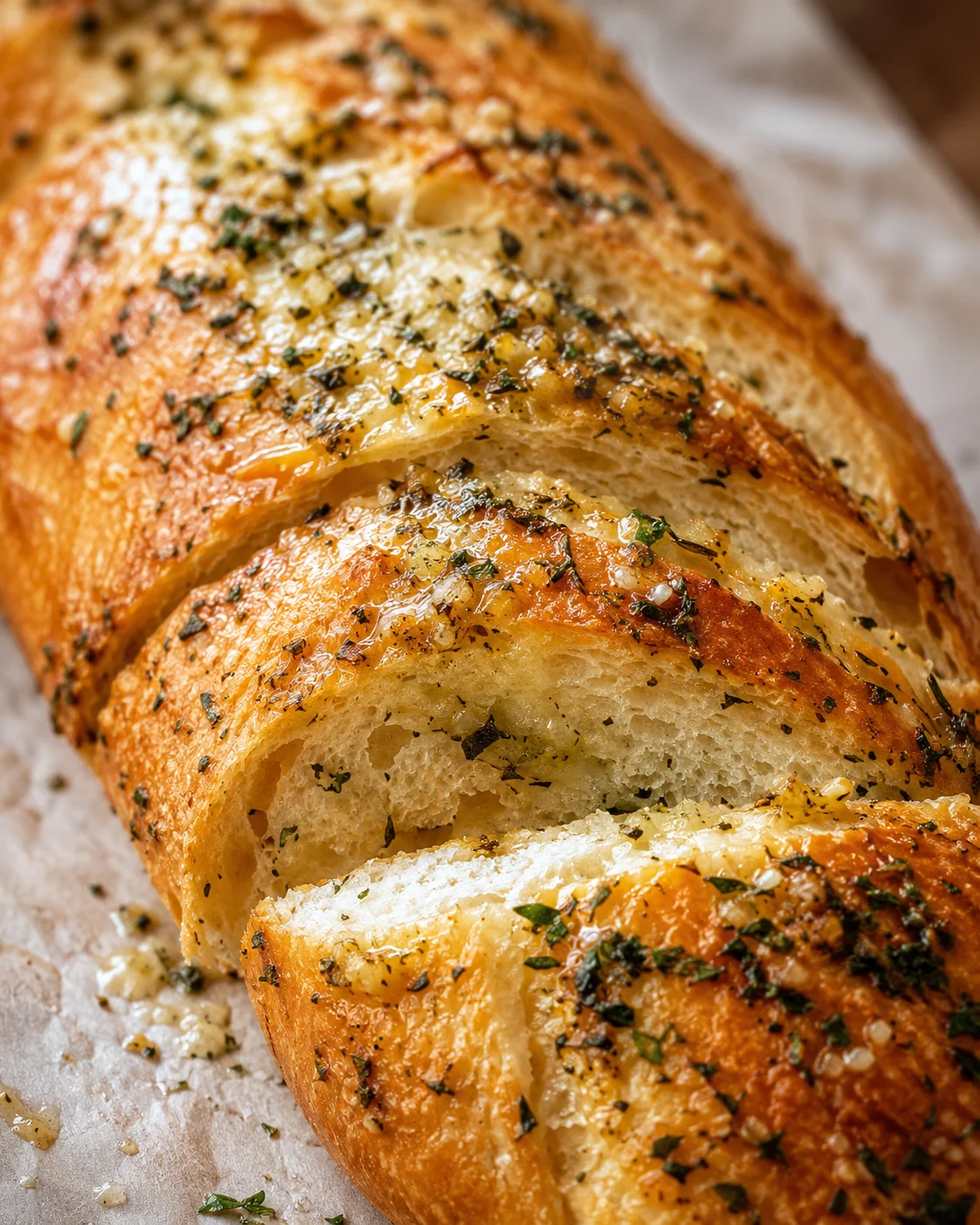
This garlic herb bread takes everyday French bread up a notch with a cozy blend of fresh herbs and garlic, baked right into the dough. We’re talking thyme, basil, marjoram, and parsley woven through tender bread that bakes golden and crusty. Then, while it’s still warm, it gets slathered with a luscious garlic-herb butter that’s all kinds of irresistible. This bread pairs beautifully with soup, salad, or your favorite pasta dishes—making every meal feel a little more special.
Here’s a simple garlic herb bread recipe you’ll keep coming back to — it’s easy to make, packed with flavor, and perfect for busy weeknights or weekend dinners alike. The dough blends fragrant herbs like thyme, basil, marjoram, and parsley right in, while the warm herb-garlic butter brushed on top after baking adds that amazing finishing touch. Expect a bread with a tender, chewy inside, a glowing golden crust, and a savory aroma that fills your kitchen and your plate.
Don’t worry about complicated steps! This bread needs just a bit over 20 minutes of your active time, plus two gentle rises that bring out the perfect texture and flavor. You’ll want to set aside some time for those rises—check out my handy notes and step-by-step photos for the best timing and a clever warm-oven trick that helps your dough rise beautifully. Plus, you can shape this garlic herb bread into two classic loaves, braid three strands for a gorgeous presentation, or make smaller rolls if that’s what your family loves.
- Inside this recipe: a full list of ingredients, easy-to-follow steps, expert tips to avoid any mishaps, tasty variations to try, and smart ideas for storing and reheating your bread.
- Why it rocks: this recipe uses simple active dry yeast, lets the dough rise twice for great texture, and combines dried herbs in the dough plus an herby buttery topping for deep, layered flavor.
Flavors, Texture, and Ease
- Intense, fresh garlic and herb flavor, thanks to both the dough and that buttery garlic herb topping.
- A straightforward dough that’s forgiving and easy to work with, boosting texture with a double-rise.
- Fast bake — just 15 to 20 minutes at 400°F means you get fresh bread in no time.
- Versatile: bake it as two loaves, a braided loaf, or small rolls to suit any occasion.
- Uses herbs you probably already have in your pantry, with marjoram adding a little extra flair to the flavor.
Ingredients You’ll Need
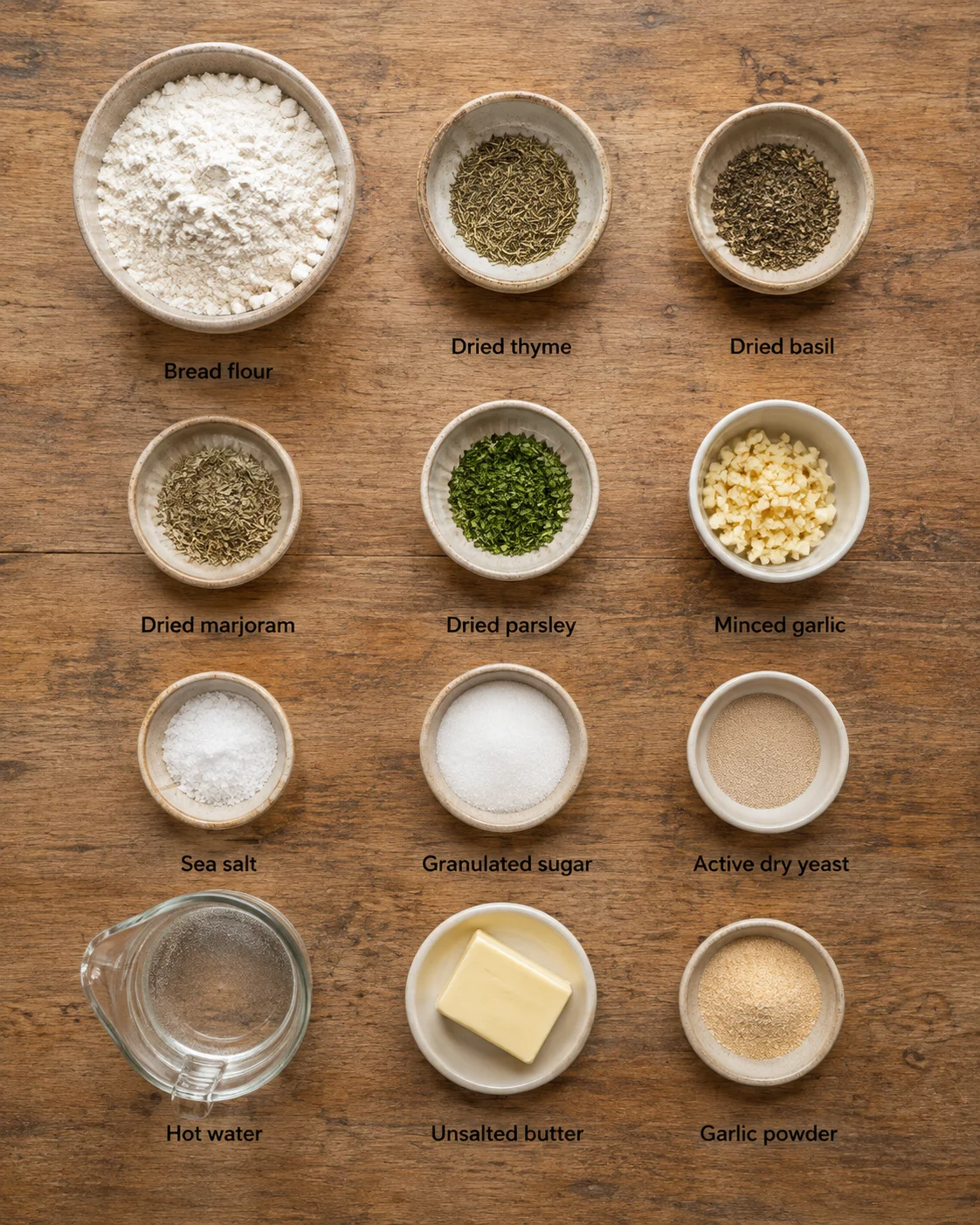
- 2 1/2 to 2 3/4 cups bread flour
- 1 teaspoon dried thyme
- 1 teaspoon dried basil
- 1 teaspoon dried marjoram
- 1 tablespoon dried parsley
- 1 tablespoon minced garlic from a jar or 4 cloves fresh garlic, finely minced
- 1 teaspoon sea salt
- 1 tablespoon granulated sugar
- 1 package (or 2 ¼ teaspoons) Fleishmann’s active dry yeast
- 1 cup hot water (about 120°F)
- 3 tablespoons unsalted butter, melted (or substitute olive oil)
- 1/8 teaspoon dried marjoram
- 1/8 teaspoon garlic powder
- 1 teaspoon dried parsley
- 1/8 teaspoon dried basil
- 1/8 teaspoon dried thyme
Mixing, Rising, and Baking
- Mix 2 cups bread flour, sea salt, granulated sugar, 1 tsp dried thyme, 1 tsp dried basil, 1 tsp dried marjoram, 1 tbsp dried parsley, 1 tbsp minced garlic (or 4 minced cloves), and 1 package (2 1/4 tsp) active dry yeast in a large bowl.
- Pour in 1 cup hot water (about 120°F) and beat until the mixture is well combined and sticky.
- Gradually add more bread flour (totaling 2 1/2 to 2 3/4 cups), stirring and kneading until you have a soft, manageable dough.
- Turn the dough onto a floured surface and knead 3 to 7 minutes until smooth and elastic.
- Lightly grease a bowl, place the dough inside and turn to coat; brush the top with a little oil or melted butter.
- Cover the bowl with a damp tea towel and set in a warm spot (optional: heat oven 1 minute then turn off and place bowl inside with oven light on) and let rise until roughly doubled, about 45 minutes.
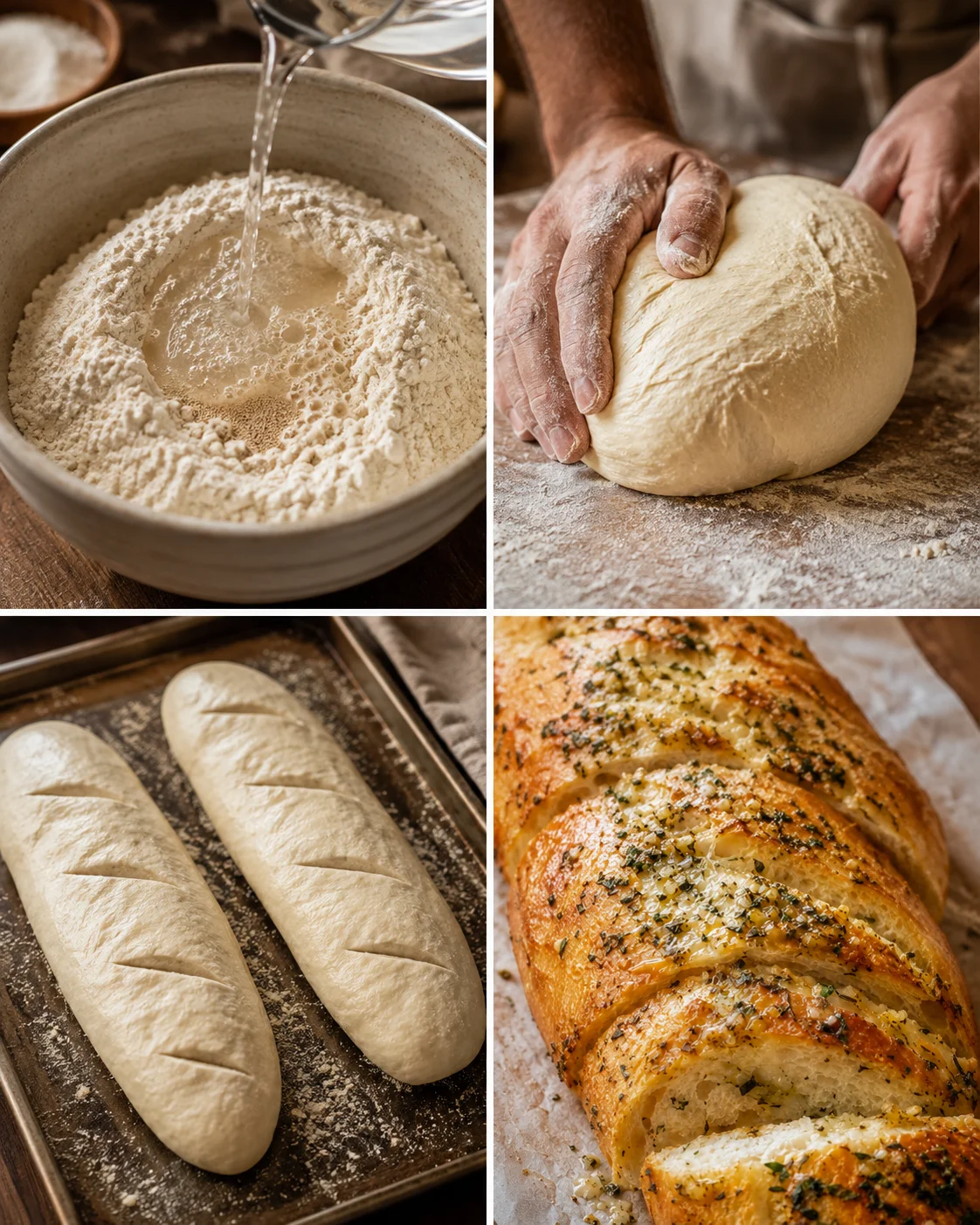
- Punch down the dough to release air, then split and shape into two long loaves, three logs for a braid, or smaller rolls.
- Place shaped dough on a greased baking sheet and, if desired, make shallow diagonal slashes across the tops.
- Cover the shaped dough and return it to the warm spot to rise a second time until puffy, about 30 to 45 minutes.
- About 5 minutes before the second rise ends, preheat the oven to 400°F (if proofing in the oven, you can leave the dough inside during preheating).
- Bake the loaves at 400°F for 15 to 20 minutes until golden brown and they sound hollow when tapped on the bottom.
- While the bread bakes, melt 3 tablespoons unsalted butter and stir in 1 teaspoon dried parsley and 1/8 teaspoon each dried marjoram, dried basil, dried thyme, and 1/8 teaspoon garlic powder to make the garlic-herb butter.
- Remove the bread from the oven and brush the crust generously with the warm garlic-herb butter.
- Let the bread cool for several minutes (up to 15 minutes) before slicing.
Tips for Best Results
- Make sure your water is around 120°F to gently wake up the active dry yeast without killing it. It should feel warm but not hot when you touch it.
- If you proof your dough in the oven, heating it for only one minute then turning it off keeps things cozy and steamy without cooking the dough. This warm-oven method also works well for soft, yeasted snacks like pizza rolls.
- Knead until your dough is smooth and elastic — usually about 3 to 7 minutes by hand for this recipe. It’s the same smooth, elastic feel you want for Cinnamon Swirl Bread.
- Don’t add too much extra flour while kneading; the dough should be a bit tacky but not sticky or dry.
- Brush the garlic herb butter right after baking so all those wonderful flavors sink into the crust.
- Stick with Fleishmann’s yeast for consistent results — other brands might cause your bread to collapse during the second rise.
Flavor Swaps and Add-Ins
- Mix in ½ to 1 cup freshly grated Parmesan or Italian blend cheese into the dough, or sprinkle on top before baking for a cheesy, savory finish. If you love cheesy loaves, try our Green Onion Zucchini Cheddar Quick Bread for another flavor-packed option.
- Use olive oil instead of butter for the garlic herb topping to keep it lighter and give it a lovely Mediterranean vibe.
- Try roasted garlic instead of fresh or jarred garlic for a sweeter, milder garlic taste. Use 2 to 3 tablespoons.
- Switch up your shapes! Make smaller rolls, knots, or a braided loaf to impress your family and guests.
- For a heartier loaf, swap up to half the bread flour with whole wheat flour—note the bread will be denser and you might need a little extra water.
- Fresh herbs add freshness and brightness — use about three times the amount of fresh herbs if you have them on hand instead of dried.
Storage, Freezing, and Reheating
- At room temperature: Let your garlic herb bread cool completely, then store loosely in a paper bag or a bread box. This keeps the crust from getting soggy and is best for 1 to 2 days.
- Short term: For 3 to 4 days, wrap the cooled bread tightly in plastic wrap or keep it in a resealable bag — the crust will soften but the inside stays nice and tender.
- Freezing: Slice the bread or freeze whole loaves tightly wrapped in foil and sealed in a freezer bag for up to 3 months. Thaw at room temp or pop slices straight from frozen into the oven.
- Reheating: Warm slices or a whole loaf in a 325 to 350°F oven for 8 to 15 minutes. If reheating from frozen, wrap the bread loosely in foil for the first few minutes to keep it moist. For a quick fix, microwave single slices for 10 to 20 seconds with a damp paper towel, though this won’t revive the crust’s crispness.
Common Questions Answered
- Can I swap instant yeast for active dry yeast? — Definitely! Use the same amount (about 2 ¼ teaspoons) and mix it into the dry ingredients directly. Just watch the rise times since instant yeast works faster.
- Can I use a stand mixer to make this garlic herb bread? — Yes, just attach your dough hook, set it to low or medium, and knead for 3–5 minutes until dough is elastic and smooth.
- How do I know when the bread’s baked perfectly? — The crust will be a beautiful golden brown, and tapping the bottoms should produce a slightly hollow sound. If you’re using a thermometer, look for about 190 to 200°F inside.
- Why does this recipe use marjoram? — Marjoram brings a sweet, subtle herbal note that balances beautifully with thyme, basil, and parsley, making the garlic herb flavor more complex and satisfying.
- Can I prepare the dough ahead of time? — Absolutely. After the first rise, cover and refrigerate the dough overnight to slow fermentation. When ready, bring it back to room temp, shape, then allow the second rise before baking. Keep in mind that refrigeration affects rising times.
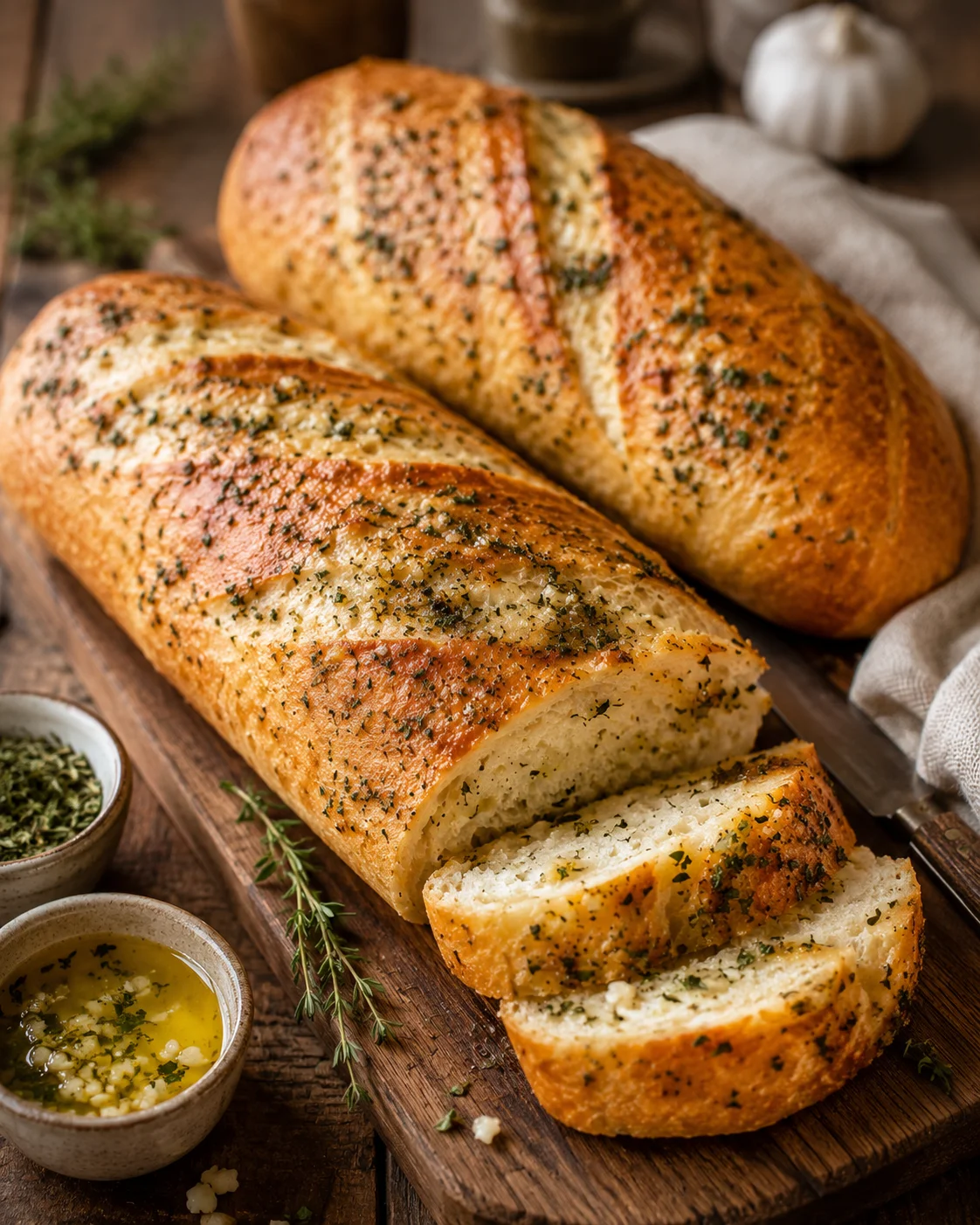
A cozy, flavorful French bread featuring a blend of dried herbs and garlic baked into the dough and finished with a luscious garlic-herb butter glaze. Tender inside with a golden crust, ideal alongside soups, salads, or pasta.
- Prep Time: 25 minutes active time plus approximately 1 hour 15 minutes total rising time
- Cook Time: 15 to 20 minutes
- Total Time: Approximately 2 hours
- Yield: 2 loaves or equivalent amount of smaller rolls 1x
- Category: Bread
Ingredients
- 2 1/2 to 2 3/4 cups bread flour
- 1 teaspoon dried thyme
- 1 teaspoon dried basil
- 1 teaspoon dried marjoram
- 1 tablespoon dried parsley
- 1 tablespoon minced garlic (from a jar) or 4 cloves fresh garlic, finely minced
- 1 teaspoon sea salt
- 1 tablespoon granulated sugar
- 1 package (or 2 1/4 teaspoons) active dry yeast (Fleishmann’s recommended)
- 1 cup hot water (about 120°F)
- 3 tablespoons unsalted butter, melted (or substitute olive oil)
- 1/8 teaspoon dried marjoram (for butter)
- 1/8 teaspoon garlic powder (for butter)
- 1 teaspoon dried parsley (for butter)
- 1/8 teaspoon dried basil (for butter)
- 1/8 teaspoon dried thyme (for butter)
Instructions
- In a large bowl, mix 2 cups bread flour, sea salt, granulated sugar, 1 tsp dried thyme, 1 tsp dried basil, 1 tsp dried marjoram, 1 tbsp dried parsley, 1 tbsp minced garlic (or 4 minced cloves), and 1 package (2 1/4 tsp) active dry yeast.
- Pour in 1 cup hot water (about 120°F) and beat until the mixture is well combined and sticky.
- Gradually add more bread flour (totaling 2 1/2 to 2 3/4 cups), stirring and kneading until forming a soft, manageable dough.
- Turn dough onto a floured surface and knead 3 to 7 minutes until smooth and elastic.
- Lightly grease a bowl, place dough inside and turn to coat; brush the top lightly with oil or melted butter.
- Cover bowl with a damp tea towel and set in a warm spot (optional: place inside oven briefly heated and then turned off with oven light on) to rise until roughly doubled, about 45 minutes.
- Punch down the dough to release air, then split and shape into two long loaves, three logs for a braid, or smaller rolls.
- Place shaped dough on a greased baking sheet; optionally make shallow diagonal slashes on tops.
- Cover shaped dough and return it to the warm spot to rise a second time until puffy, about 30 to 45 minutes.
- About 5 minutes before second rise ends, preheat oven to 400°F (if proofing dough in oven, dough can remain inside during preheating).
- Bake bread at 400°F for 15 to 20 minutes until golden brown and hollow-sounding when tapped on bottom.
- While baking, melt 3 tablespoons unsalted butter and stir in 1 teaspoon dried parsley, 1/8 teaspoon each of dried marjoram, dried basil, dried thyme, and garlic powder to make garlic-herb butter.
- Remove bread from oven and brush crust generously with the warm garlic-herb butter.
- Let bread cool for several minutes up to 15 minutes before slicing.
Notes
Use water around 120°F to activate yeast without killing it; it should feel warm but not hot to the touch., Proofing dough in an oven briefly heated then turned off with oven light on creates a cozy rising environment without cooking dough., Knead dough until smooth and elastic (3-7 minutes by hand)., Dough should be tacky but not sticky or dry; avoid adding too much flour while kneading., Brush garlic herb butter onto bread right after baking for best flavor penetration., Use Fleishmann’s yeast for consistent rises and texture; other brands may cause collapse during second rise., Variations include adding 1/2 to 1 cup freshly grated Parmesan or Italian cheese to dough or sprinkle on top prior to baking for a cheesy finish., Use olive oil instead of butter in herb topping for a lighter, Mediterranean flavor., Try roasted garlic (2-3 tablespoons) instead of fresh or jarred garlic for a milder, sweeter garlic taste., Shape bread into loaves, braids, rolls, or knots to suit preferences., Substitute up to half bread flour with whole wheat flour for heartier bread, noting it will be denser and may require slightly more water., For fresh herbs, use approximately three times the quantity of dried herbs., To prepare ahead, refrigerate dough after first rise overnight, then bring to room temperature, shape, and complete second rise before baking., Store cooled bread loosely in paper bag or bread box at room temperature for 1-2 days to maintain crust., Wrap cooled bread tightly in plastic or resealable bag for 3-4 days storage; crust will soften but interior stays tender., Freeze whole or sliced bread tightly wrapped in foil and freezer bag for up to 3 months; thaw at room temp or bake slices directly from frozen., Reheat in 325 to 350°F oven for 8-15 minutes; if frozen, wrap loosely in foil initially to keep moist., Microwave slices for 10-20 seconds with damp paper towel for quick reheating, though crust crispness is not preserved.
Nutrition
- Serving Size: 1 slice (dependent on slicing thickness)
- Calories: Approximately 150-170 kcal per slice (estimated based on ingredients)
- Fat: Approximately 4-6 grams per slice (estimated)
- Carbohydrates: Approximately 28 grams per slice (estimated)
- Protein: Approximately 4 grams per slice (estimated)